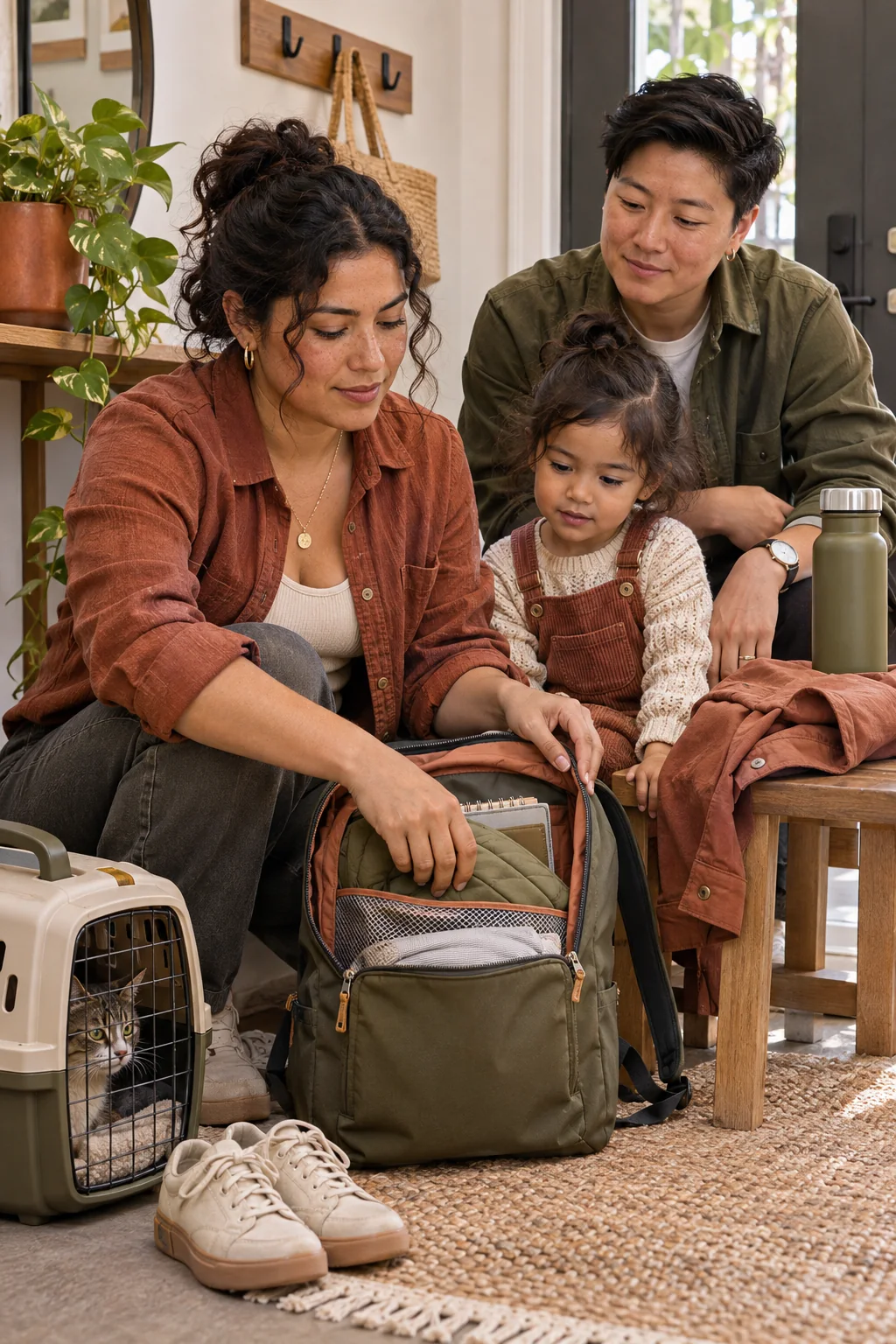
Put animals into the household plan from the beginning
An evacuation plan becomes much harder when the household reaches the door and realizes there is no carrier, the chosen hotel does not accept the animal, or the only person able to handle it is away. Include pets in the first planning conversation. List each animal, its normal care, its transport needs, and the person responsible for it. A quiet indoor cat, an older dog, a bird, and a small mammal may need different arrangements. Ask a veterinarian about needs that are unfamiliar or medically specific.
CDC warns that leaving pets out of evacuation plans puts animals, owners, and responders at risk. It recommends planning where animals will stay, preparing supplies and records, and practicing transport: official source ↗. Use that framework while checking local arrangements. This article concerns companion animals; livestock and specialist species may require additional plans. Do not assume a general dog friendly policy covers every animal, or that an informal promise will remain possible during a regional emergency.
Confirm somewhere the whole household can go
Contact potential hosts before an emergency. Ask about the number and type of animals, size restrictions, carriers, fees, vaccination records, and the length of stay. A hotel search result is a starting point, not confirmation of a reservation or an emergency exception. If a public shelter is part of the plan, check current official information about whether pets are housed there, nearby, or through a separate arrangement. Service animal access follows applicable laws and policies, which differ by jurisdiction and should not be confused with ordinary pet rules.
Keep two destination options and a veterinarian or boarding contact near each. Consider how the animal's care will fit with the people traveling: a person needing an accessible room should not discover that the only pet arrangement is in a building they cannot use. If separation is unavoidable, agree how the animal will be handed over, identified, visited, and collected. Record the arrangements in plain language with dates and contacts. A plan is stronger when the person receiving the animal has actually agreed to the responsibility.
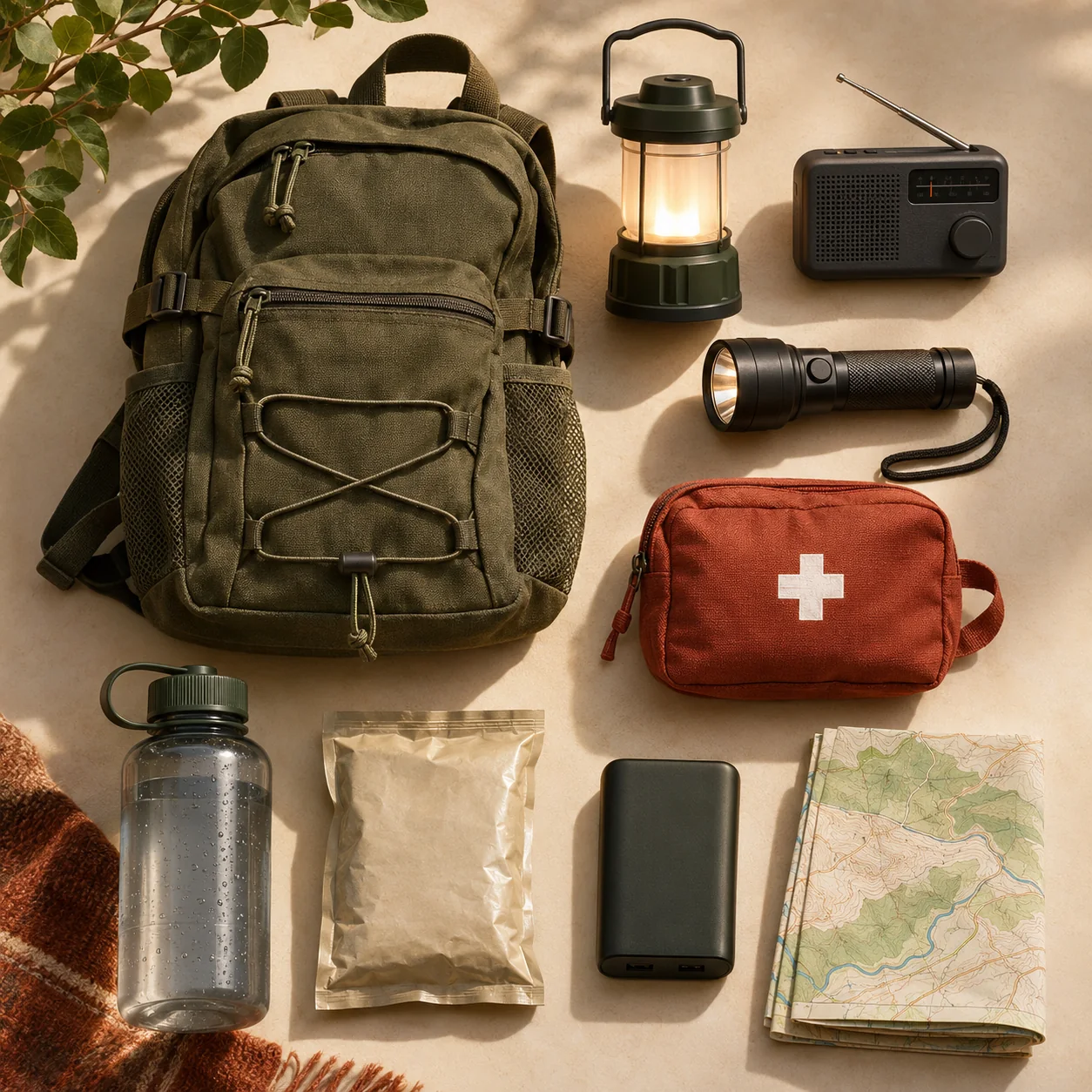
Make identification readable and records reachable
Check collars and tags, microchip registration details, and the contact information connected to them. A microchip is not useful as a lost pet contact route if its registration still points to an old phone number. Keep a recent clear photograph and an identifiable description with the household records. Place essential veterinary contacts, vaccination records, prescription details, and care instructions in a protected folder. Include enough information for an authorized carer to explain the animal's needs without searching through years of messages.
Label the carrier with practical contact information while considering privacy. Keep an accessible digital copy of records and a paper version that can travel if the phone fails. If crossing a border or traveling far from home, check current animal entry and transport requirements well in advance; requirements are not uniform globally. Ask the veterinarian about any necessary documents and timing. Do not wait until the warning to discover that the animal's normal paperwork does not satisfy the destination or transport provider.
Pack the care routine, not a novelty pet kit
Build supplies around what the animal already uses: suitable food, safe water, bowls, medication stored as directed, a leash or other appropriate handling equipment, waste supplies, and a familiar comfort item where helpful. Include a practical opener and measuring method if needed. The American Red Cross provides a pet kit checklist at official source ↗. Ask the veterinarian how much to keep and what to do if an interruption affects prescription supplies. Do not change medication doses or give sedating products on the basis of an online preparedness suggestion. Species, health, and individual behavior make that a veterinary decision.
Check the bag against the destination. A hotel room may require different containment and cleanup arrangements from a friend's home. Divide supplies into manageable loads so carrying the pet does not make the rest of the plan impossible. Keep important equipment near the normal exit, without obstructing it. Rotate food and medicine appropriately, and inspect carriers and fastening parts. The best bag is one the assigned person can locate, carry, and use while also managing children, mobility aids, or their own necessary belongings.
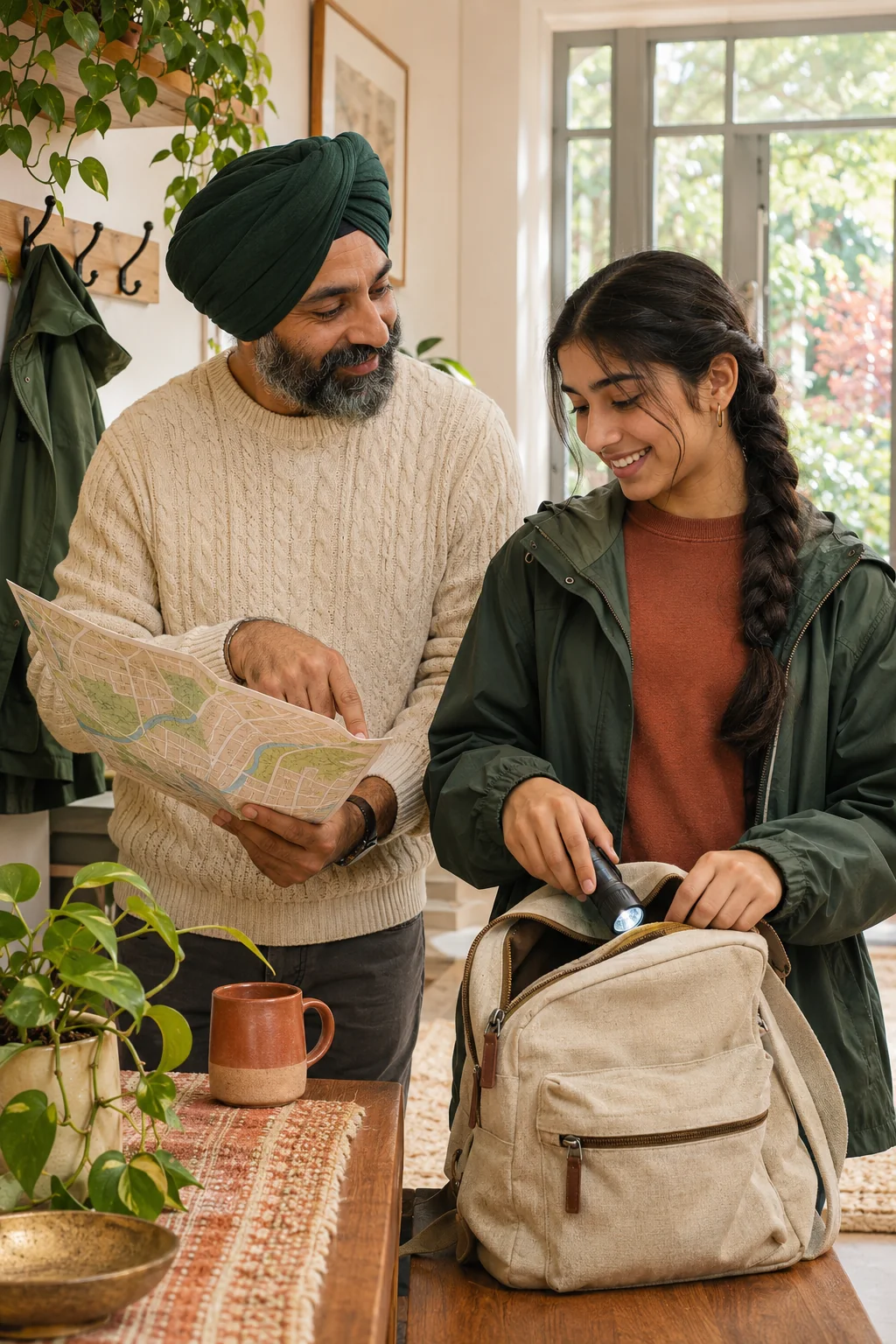
Practice transport without creating a crisis
Make the carrier familiar during normal life and practice the steps recommended by the veterinarian or a qualified trainer. Learn where the animal tends to hide when frightened and discuss safe handling. Test the carrier and household luggage in the vehicle or transport arrangement you would actually use. An animal needs appropriate restraint; it should not be loose in a vehicle. If the household has no car, confirm a willing driver or an available official transport option that can accommodate the animal and its carrier.
Assign jobs during a safe practice: one adult handles the animal, another takes the records, and a child carries an appropriate light item if that helps rather than delays departure. A person living alone can use the same exercise to see which loads need simplifying. Stop if the rehearsal is causing distress and seek suitable advice. Do not force an unsafe handling attempt to complete a checklist. The aim is to reduce surprise and make the necessary steps more familiar before an actual warning raises everyone's stress.
Arrange a backup and manage the unfamiliar setting
Ask a trusted person what they can do if you are away when an emergency begins. Agree on contacts, access, the animal's location, equipment, destination, and the limits of the role. Nobody should enter a dangerous building to complete a pet collection. Provide enough information for the backup to act safely within the agreed arrangement, and keep access details secure. Check the plan again when work schedules, addresses, locks, or the animal's care change. An unconfirmed expectation of neighborly help is not a reliable backup.
During relocation, keep animals appropriately contained and follow veterinary and shelter instructions. Do not leave a pet chained outdoors or waiting in a parked vehicle. New surroundings and changed landmarks can make animals confused, including after the household returns home. Inspect the safe living area and maintain controlled movement rather than assuming familiar behavior will resume immediately. If an animal is injured, ill, or behaving in a concerning way, contact a veterinarian or the appropriate local service. A successful evacuation preserves a workable care routine for the animal and the people responsible for it.
Your next useful moves
- Confirm two destinations that can actually accommodate each animal.
- Update tags, microchip contacts, photographs, and veterinary records.
- Pack familiar food, necessary medicines, handling tools, and waste supplies.
- Rehearse the real carrier and transport arrangement safely.
- Agree on a backup carer with clear limits and secure access.
Leave-Ready Checklist gives you a small first step.
Get the free resource →Local instructions, individual needs and product specifications can change. This research edition is educational; follow current authorities and appropriate qualified professionals.
Report a correction →