

The planning questions travel. The instructions need a location.
A household in an Indian apartment, a Canadian winter, a Caribbean storm zone or an American city can share the same concerns: safe water, familiar food, communication and people who need help. The correct local actions can differ.
Start with your own emergency management agency, meteorological service, public-health authority and utility. Check the official language and units, local emergency numbers and the instructions for the hazard actually affecting your area.
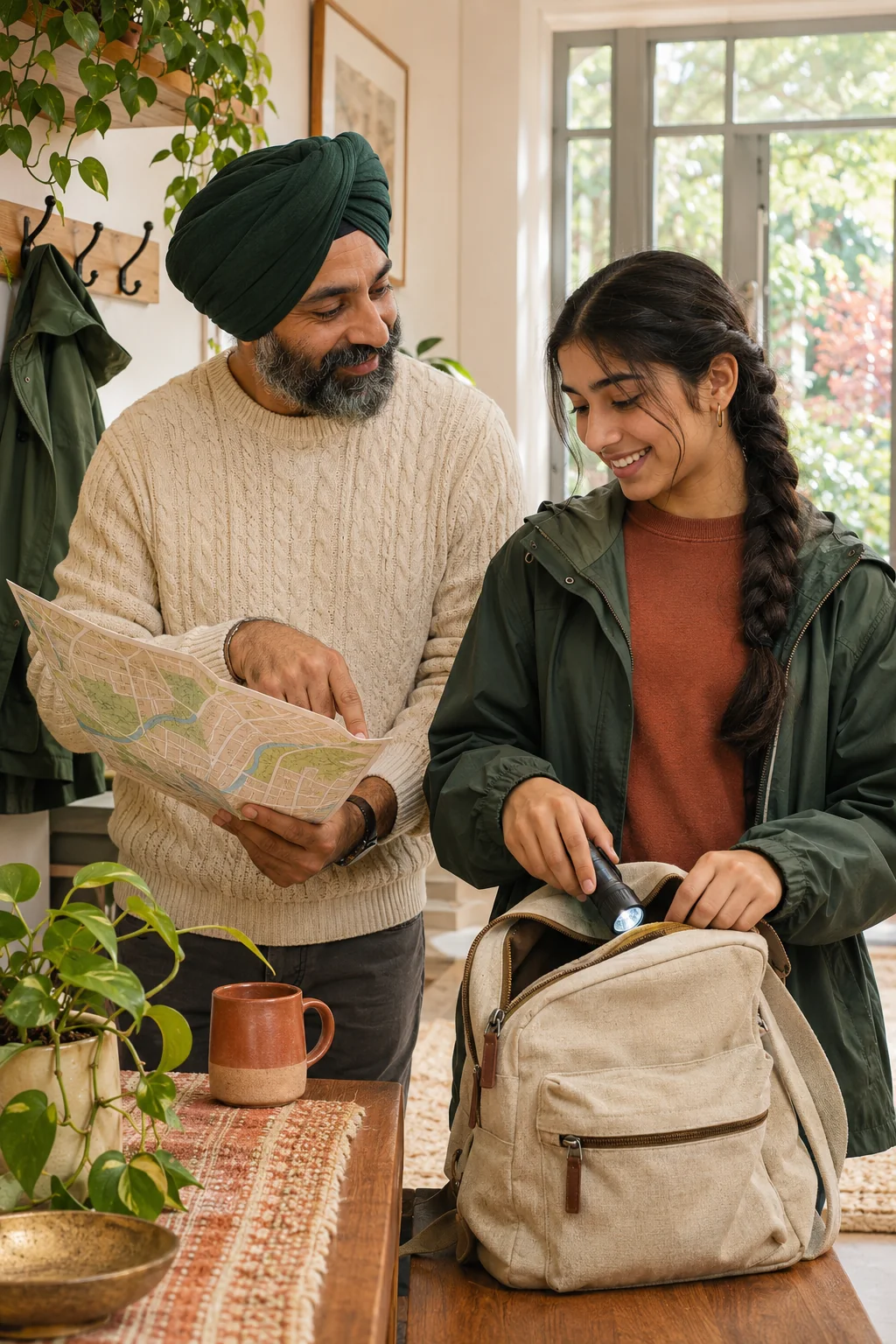
Translate carefully.
Use liters or US gallons consistently. Confirm electrical standards, plug types, local radio services, medicine arrangements and product certifications. A translated checklist should be checked by a person who understands the language and the local emergency context.
Keep culture and access in the plan.
Familiar food, religious practice, dietary needs, mobility, communication and trust networks belong in the conversation. Do not assume that a warehouse shopping list, a car-based evacuation or a large storage room works for every household.
Useful official starting points
United States
FEMA household planning and hazard guidance.
Canada
Official federal preparedness resources.
United Kingdom
Official household preparedness guidance.
Australia
Australian Red Cross preparation resources.
India
National Disaster Management Authority information.
New Zealand
Official emergency preparedness resources.
These starting points are not an exhaustive worldwide directory. Use the official local authority for where you are now.