
A checklist travels farther than its assumptions
A preparedness video may show an American garage, a large vehicle, packaged foods from a warehouse club, and a weather radio. The viewer may live in a Mumbai apartment, a London house share, a rural community, or a coastal town where those details do not fit. The underlying needs remain recognizable: safe water, suitable food, care, information, shelter, movement, and connection. The products and procedures need to be translated into the place and household where they will be used.
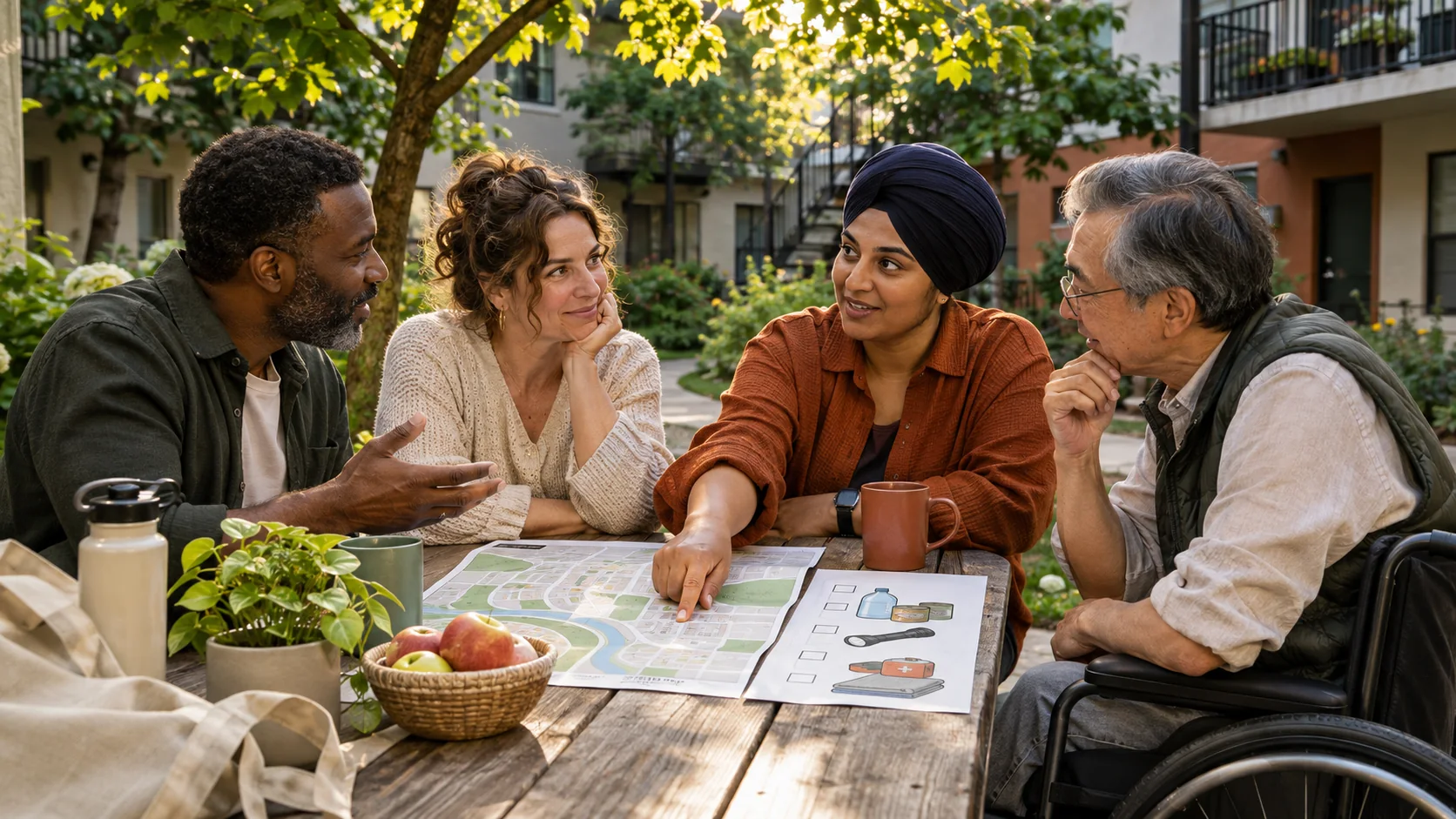
Start with your own address and daily routine. Identify the official local sources for hazards and warnings, the emergency numbers that apply, and the services you actually depend on. A useful global approach does not pretend every country has the same utilities, building systems, emergency services, or payment options. It gives you a process for asking the right local questions and replacing imported assumptions with workable answers.
Use local authorities for local decisions
Find your national or regional disaster-management agency, local government, weather service, public-health authority, and relevant utility providers. Check that the sites are official, understand how they issue alerts, and record important contact details offline. If you travel or divide time between countries, create separate local information sheets. The emergency number, evacuation advice, and trusted broadcast source from one country should not quietly follow you into another.
Examples of official starting points include New Zealand's Get Ready household guidance, the UK government's Be Ready guidance, and Canada's emergency-kit resources. These are examples for their jurisdictions, not a complete international directory. Their advice and the scope of their quantities can differ. Follow your applicable authority and account for the specific conditions at home.
Translate quantities, not just words
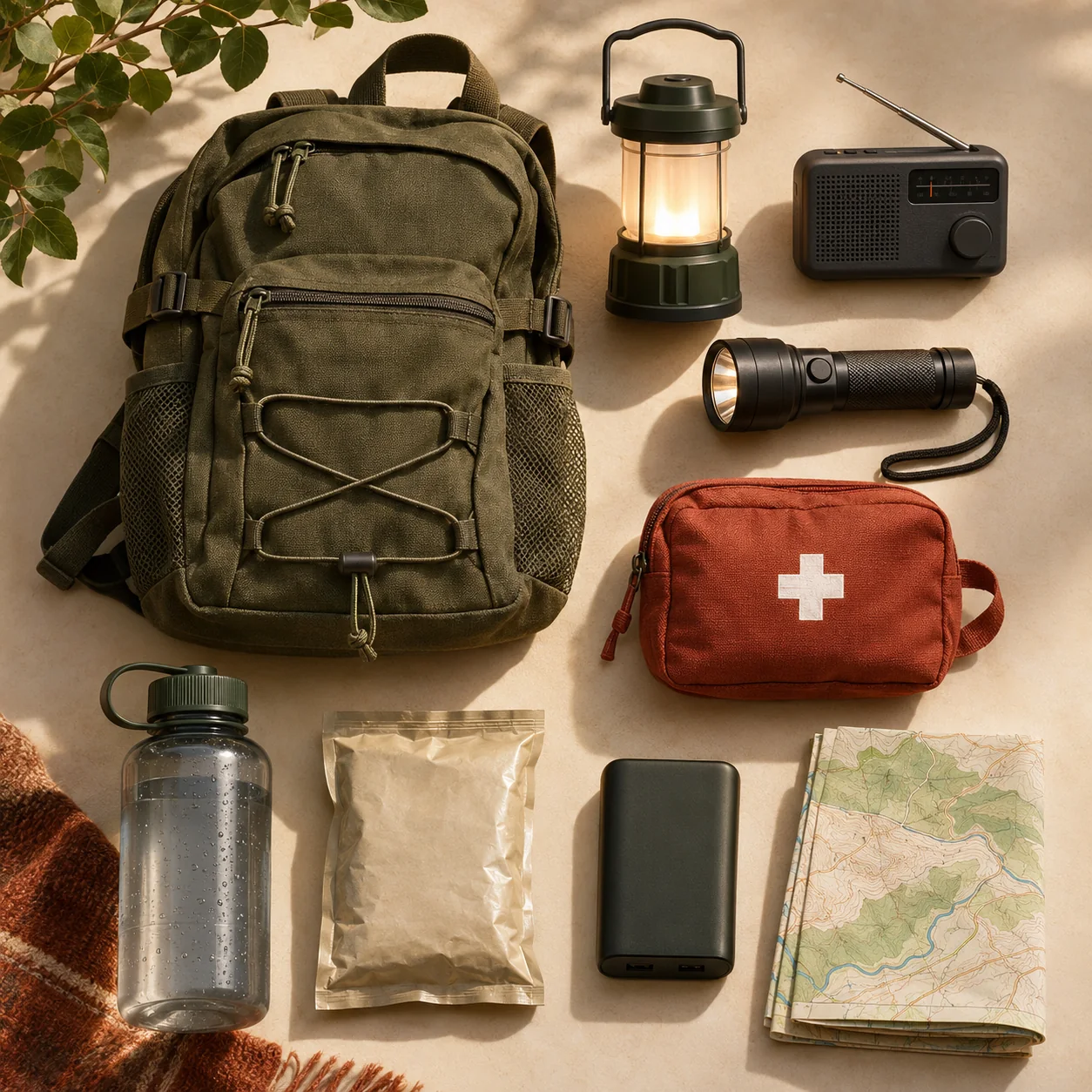
Water guidance is a good example. A number may describe drinking alone, or include cooking and basic hygiene; different authorities also use different planning periods. Read the complete context before comparing figures. If a US guide uses gallons, convert carefully and label the unit, including whether it means US gallons. Do not assume a familiar-looking number in another country covers the same needs.
The practical question is how the household will maintain safe water access when its usual supply is interrupted. Consider temperature, illness, pregnancy, care needs, pets, and the amount used to prepare the foods you store. Use containers suitable for drinking water and locations appropriate to their weight and condition. Treatment instructions should come from the relevant public-health authority for the actual hazard, not from an unverified global formula.
Apartments need building-level questions
In an apartment, ask how warnings reach residents, what the building's emergency procedures are, and what happens when lifts, pumps, access controls, or common-area lighting lose power. Discuss evacuation assistance and accessible routes with building management and relevant local services. Do not improvise a solution involving shared corridors, fire doors, or equipment simply because an online image makes it look convenient.
Choose manageable supplies that fit safely within the home. Keep exits clear, respect storage restrictions, and consider what each person can carry if leaving becomes necessary. A high floor, unreliable lift, or limited mobility can change the plan more than the brand of backpack. Talk through who will check on whom, while making sure no arrangement depends on a neighbor being available every time.
Rural households need continuity questions
Longer travel distances can make fuel access, road closures, medical appointments, and resupply more consequential. Identify the services that depend on electricity or a single route. A household using a private water system should understand how that system is affected by an outage and seek qualified local advice for safe backup arrangements. The same applies to agricultural or animal-care responsibilities that a general urban kit may omit.
Build a support network with realistic distances and communication limitations in mind. Discuss alternate contact methods and when someone should seek help if a check-in is missed. Do not assume that owning land creates independence from outside systems. Maintenance, repairs, medication, accessible transport, and specialist assistance still need planning. A sensible rural buffer should match credible local interruptions and the household's capacity to maintain it.
Coastal and hazard-exposed homes need decision points
For a coastal household, understand the specific local hazards and official evacuation arrangements rather than treating all water-related risk as the same. Storm surge, river flooding, intense rainfall, and tsunami warnings can involve different instructions. Identify the routes and destinations relevant to your location, and use local authorities to define the action you should take. Do not rely on the presence of stored supplies as a reason to ignore an evacuation order.
The same principle applies to wildfire, heat, severe cold, earthquakes, and other locally significant hazards. Decide in advance which information sources trigger your next step and what might make staying at home unsuitable for a household member. Any specialist building, medical, or technical question deserves appropriate local expertise. A generic preparedness guide can help organize decisions, but cannot inspect your building or determine the safety of a route during an active event.
Culture and accessibility belong in the core plan
Food is one of the clearest places to make the plan your own. Choose familiar options that respect dietary, religious, health, and cultural needs, then check whether they can be safely stored and served during the relevant interruption. Plan for actual meal preparation rather than stocking foods nobody wants to eat. Shared households may need clearly labeled individual supplies as well as common ones.
Make information usable in the languages and formats people need. New Zealand's official Get Ready site, for example, provides multiple languages and accessible formats; look for equivalent resources in your location. Ask directly about hearing, vision, mobility, cognitive, and communication needs rather than assuming one printed sheet works for everyone. Include children, older adults, carers, and people living alone in the conversation without treating any group as interchangeable.
Test a local day, then update the plan
Walk through an ordinary day with one service hypothetically unavailable. How will you prepare a meal, receive an official update, reach a care provider, pay for essentials, and reconnect after separation? Use the exercise to identify gaps while normal services are available. Avoid turning it into a surprise or a dangerous deprivation challenge.
Write down the next three improvements and review them after moving, traveling, changing household members, or experiencing a local disruption. Good preparedness can be shared across cultures because the needs are human. It becomes effective when the details belong to the people and place the plan is meant to serve.
Your next useful moves
- Identify official local warnings, emergency numbers, and utilities.
- Read the scope and units behind supply quantities.
- Adapt for apartment, rural, coastal, and local hazard conditions.
- Include cultural, dietary, language, and access requirements.
- Test an ordinary day and record the next three improvements.
Household Handoff Sheet gives you a small first step.
Get the free resource →Local instructions, individual needs and product specifications can change. This research edition is educational; follow current authorities and appropriate qualified professionals.
Report a correction →