
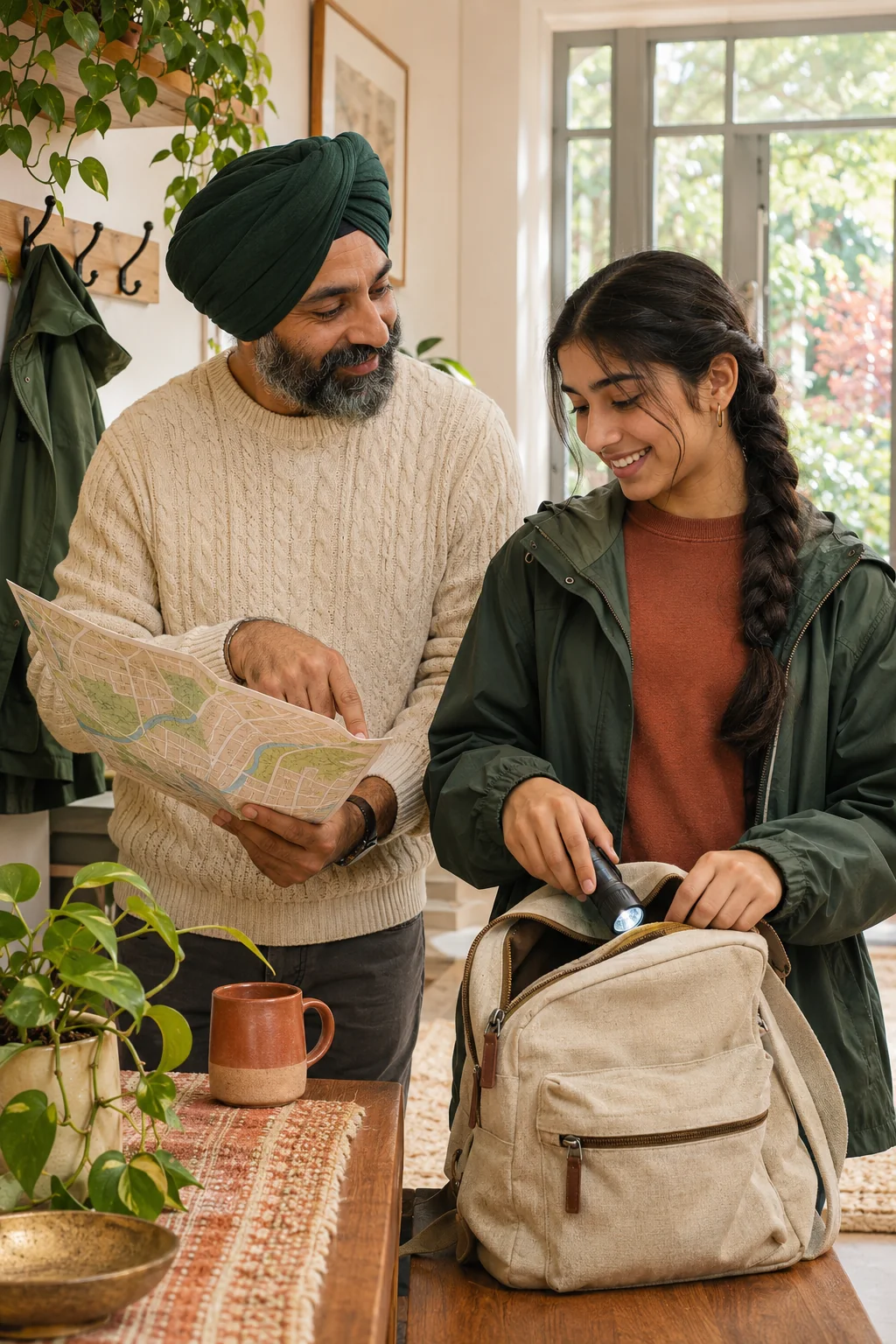
Prepare for your building, not somebody else's property
Apartment preparedness is often described as a smaller version of a suburban garage stockpile. That misses its strongest features and its real constraints. You may have neighbors close by, several exits to understand, shared water and heating systems, a building manager, and little storage. You may also depend on an elevator or a secured entrance. Start by describing the actual building and the people in your household. A practical plan fits the tenancy, the layout, the access arrangements, and the supplies that can be stored safely.
Take a short tour during an ordinary day. Find the posted emergency information, exit stairs, building contact details, and safe outside meeting location. Ask management how alerts reach residents and what arrangements exist for outages or evacuation assistance. Do not assume a concierge, elevator, electronic fob, or intercom will function through every disruption. Record confirmed facts separately from questions. That distinction prevents an untested assumption about a shared building system from becoming the foundation of the entire household plan.
Learn the fire plan and keep exits usable
Fire instructions are specific safety information, not a place for creative survival ideas. The US Fire Administration says residents should know their exit stairs, close the apartment door when leaving, and use stairs rather than an elevator unless the fire department directs otherwise. Learn your building's instructions and discuss accessibility needs with management and the relevant fire authority before an incident. Do not enter smoke to complete a routine or collect supplies. The USFA resource is at official source ↗.
Keep bags, shoes, and bicycles out of your exit route and shared corridors. Do not prop open fire doors. During a planned practice, notice whether a child can manage the door, whether an older visitor knows the route, and whether the meeting point can be described without a phone map. Anyone unable to use the standard route needs an individualized, agreed assistance plan; carrying a person down stairs is not an appropriate improvisation for untrained neighbors. A clear request made before an emergency creates more useful options than an assumption that somebody will help.
Store supplies by function and access
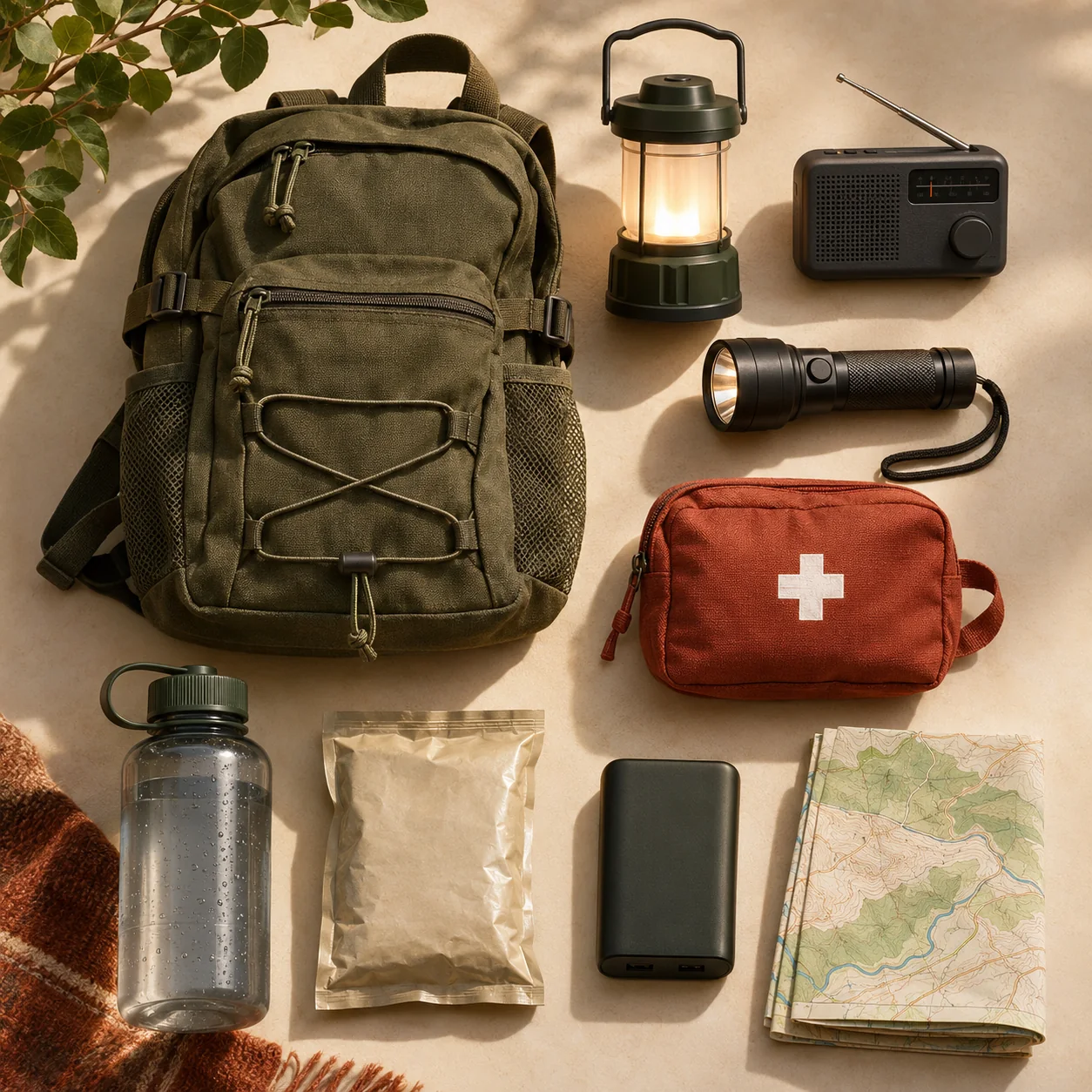
Instead of one giant emergency box, consider a few clearly labeled groups: drinking water, meals, lighting and communication, personal care, and the bag that leaves with you. Use safe storage locations where containers cannot block doors or fall onto a sleeping area. Check landlord rules and storage limits before adding heavy shelving, large water containers, or equipment. Keep the most urgent items reachable without a ladder. A flashlight at the entrance is easier to use during an outage than one buried beneath seasonal clothing.
Choose container sizes people can move. A reserve divided into manageable units may be more practical than a heavy bulk purchase. CDC's US water baseline is at least one US gallon, approximately 3.8 litres, per person per day for three days; additional needs may require more. Use its storage guidance at official source ↗ and adapt to local advice. Work toward a realistic reserve gradually, while arranging an alternative source if storage space limits what you can keep.
Choose outage tools that suit shared space
Battery lanterns, compatible power banks, a radio, and meals that require no flame can cover useful apartment needs. Identify which devices must keep working and which can wait. A phone battery is not a substitute for a medically appropriate backup supply. Ask equipment suppliers about actual requirements and arrange relocation if essential care cannot continue. Keep manufacturer manuals and charging accessories together so another household member can operate the setup. Test the ordinary steps before trying to rely on them in darkness.
Do not bring combustion equipment indoors or treat a balcony as a safe generator installation. CDC requires generators outdoors at least 20 feet, approximately 6 metres, from doors, windows, and vents; nearby apartments have openings too. Never use a generator in a home, basement, or garage, even with doors open. Its outage guidance is at official source ↗. For many apartments, the workable backup is a confirmed place to go, rather than an attempt to recreate house scale power generation inside a shared property.

Plan for neighbors without making promises you cannot keep
A small resident contact circle can share accurate notices, check on someone who requests it, or coordinate transport. Ask consent before circulating numbers or health information. Agree on the scope: a check in is not a guarantee of rescue, medical care, or access to another person's apartment. Identify the building contact and local emergency number so the group knows when to call professionals. Avoid sending unverified reports through the group merely because they sound urgent. Include the source and time when forwarding an official notice.
Think about language and communication access. A text may work for one neighbor while another needs a spoken message or an accessible format. A resident working nights may miss an afternoon door knock. Ask people what method they prefer instead of making assumptions. If the household is away when an evacuation occurs, decide who can contact you and what they are authorized to do. Do not distribute keys casually or expect a neighbor to enter unsafe conditions to retrieve belongings or an animal.
Make staying and leaving two complete options
Write down what would make the apartment unsuitable: an official order, unsafe temperature, essential equipment failure, loss of an accessible route, or another actual hazard. Identify a destination and a transport method that do not depend on the same system that failed. A friend across town is only a plan when they agree, the route is appropriate, and the household can enter with its accessibility and pet needs. Keep essential documents, medicines, a change of clothing, and communication aids ready to travel in manageable bags.
Finally, practice one small scenario rather than staging a dramatic exercise. Find the flashlight without the room light. Carry the departure bag to the meeting point during a safe planned walk. Try preparing a no cook meal with the stored utensils. Each attempt will reveal a concrete gap: the bag is too heavy, the contact number is outdated, or the agreed door needs a fob. Fix the gap that matters most. Apartment readiness is the ability to make good decisions within shared space, not the amount of gear visible in a cupboard.
Your next useful moves
- Confirm the building alert, outage, and evacuation arrangements.
- Discuss individual accessibility needs before an incident.
- Keep exits and shared corridors clear.
- Use manageable supply containers and reachable storage.
- Confirm a destination and transport option suitable for everyone.
Household Handoff Sheet gives you a small first step.
Get the free resource →Local instructions, individual needs and product specifications can change. This research edition is educational; follow current authorities and appropriate qualified professionals.
Report a correction →