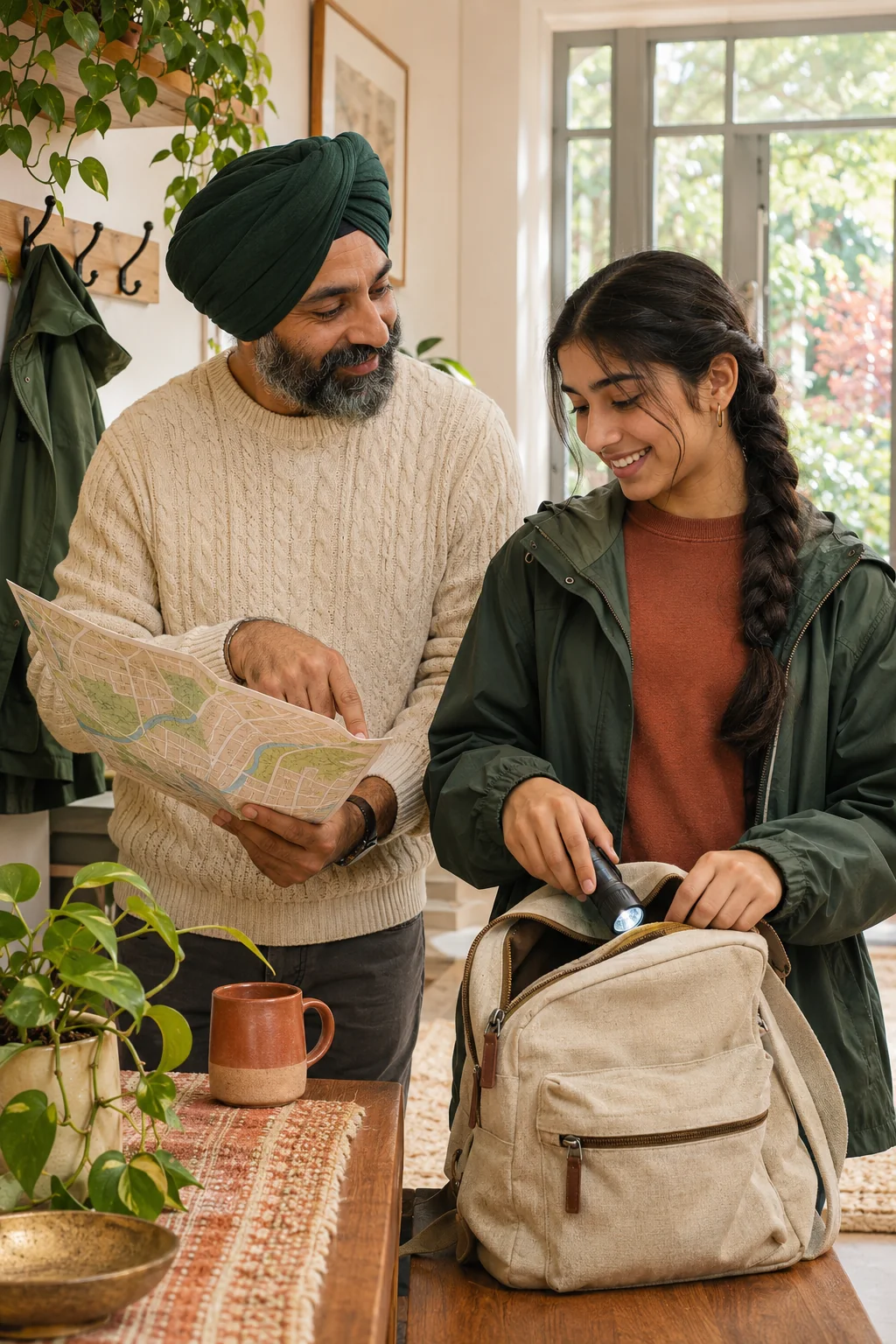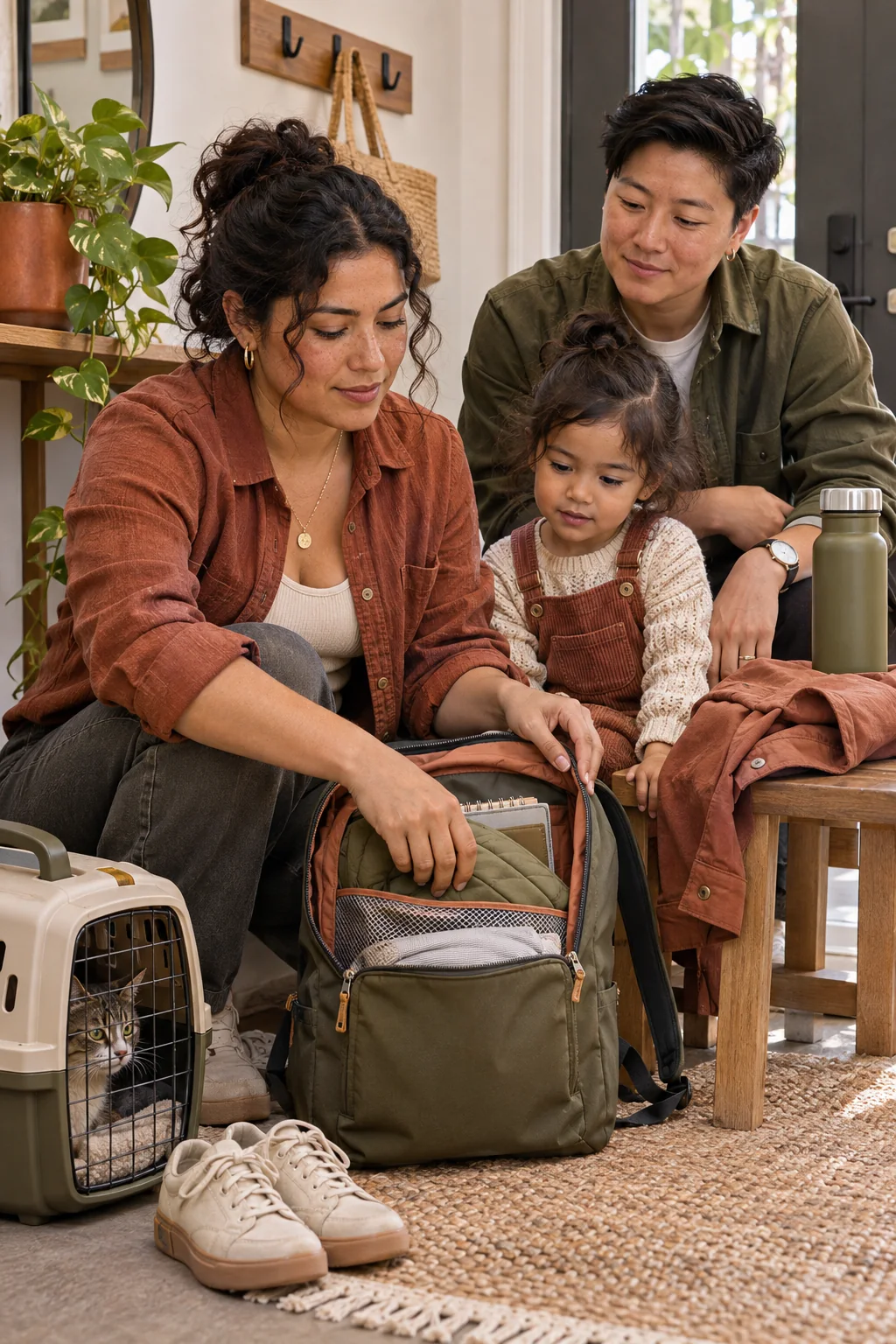
Leaving has more moving parts than packing.
A household can own several emergency bags and still have unanswered questions. Who carries what? How will the child, pet or older relative travel? Where will essential documents be accessible? What if the usual vehicle or route is unavailable? This system helps you review the decisions around the bag, so equipment becomes part of a usable arrangement rather than a substitute for one.
Fit the plan to the people.
This is for renters, homeowners, people living alone, busy families and households with different mobility or support needs. Some people leave on foot; others depend on a car, public transport or help from someone nearby. Your plan should acknowledge that reality. The framework is useful across regions, while evacuation warnings, shelter rules, border requirements and local routes must be checked with the responsible authorities.
Begin before you buy another pouch.
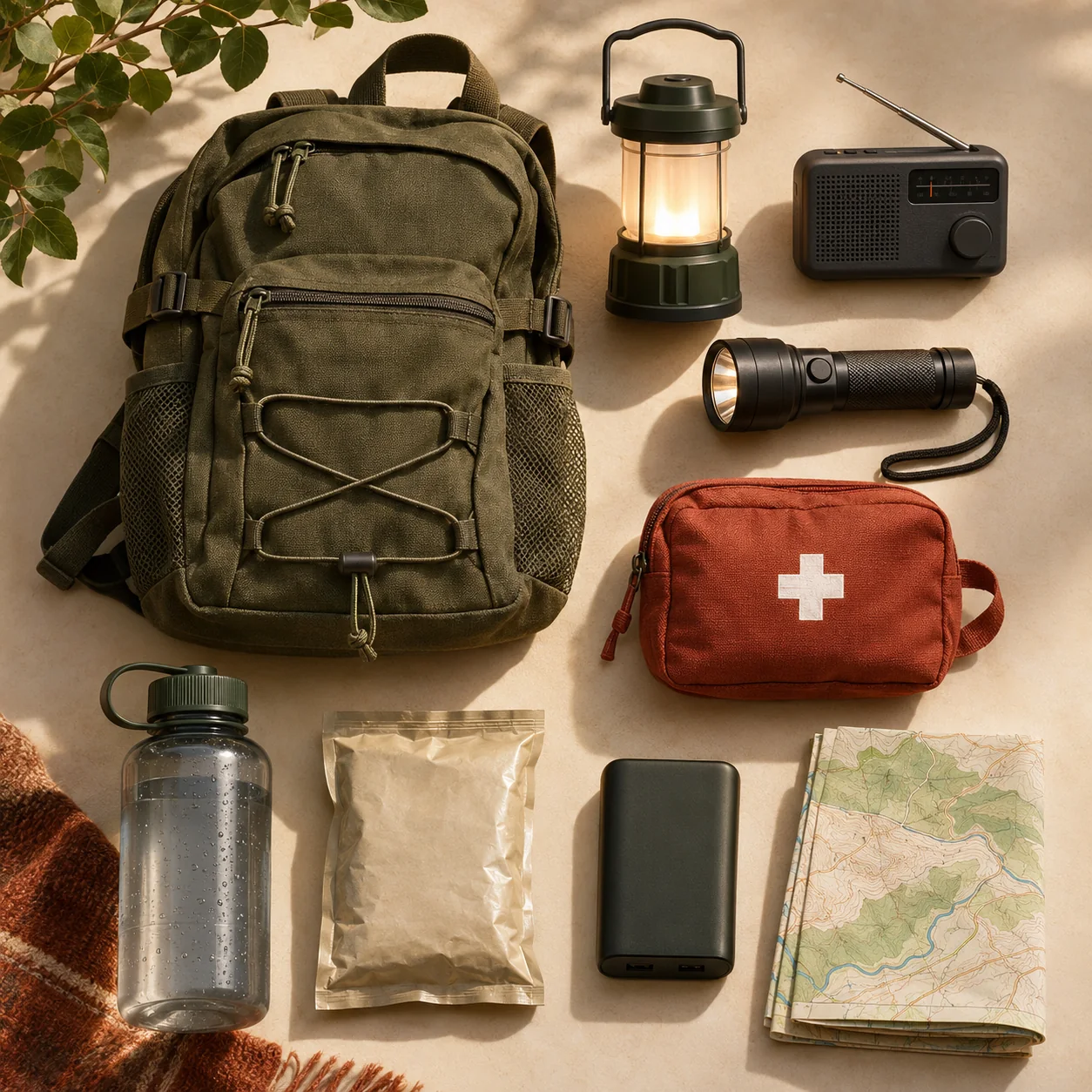
The free Leave-Ready Checklist gives you a simple starting point for reviewing the essentials and the unanswered questions around leaving. It is separate from the full paid field guide. Use it to look at what you already have, who depends on it and what is difficult to carry or replace. The first useful improvement may be a conversation or an arrangement, rather than another item in the bag.
Build a leave-ready household system.
The private field guide supports a more complete review of people, equipment, transportation, information and practical departure planning. Six written mini-course lessons help you turn those decisions into assignments and a manageable rehearsal. You consider tradeoffs, identify important dependencies and record what needs further checking. A standardized “ultimate bag” cannot resolve those questions for every household; the work is making the choices fit your circumstances.
Make readiness something you can demonstrate.
The realistic payoff is knowing what you can carry, what still needs arranging and how household members understand their roles. A short practice can reveal problems that a product photo cannot: inaccessible supplies, excess weight or a missing assumption about transportation. No guide guarantees a safe route, available shelter or a successful evacuation. Follow official instructions and adapt to the actual conditions rather than treating a checklist as permission to take risks.
Work toward a plan you can use.
Start with the free checklist. If you want the complete guide and written lessons, request launch details. When purchase access opens, work through the assignments at your pace and involve the people who may need to leave with you. Review equipment and agreements when seasons, abilities or household needs change. Keep readiness realistic enough that it does not disappear the moment everyday schedules get busy.